
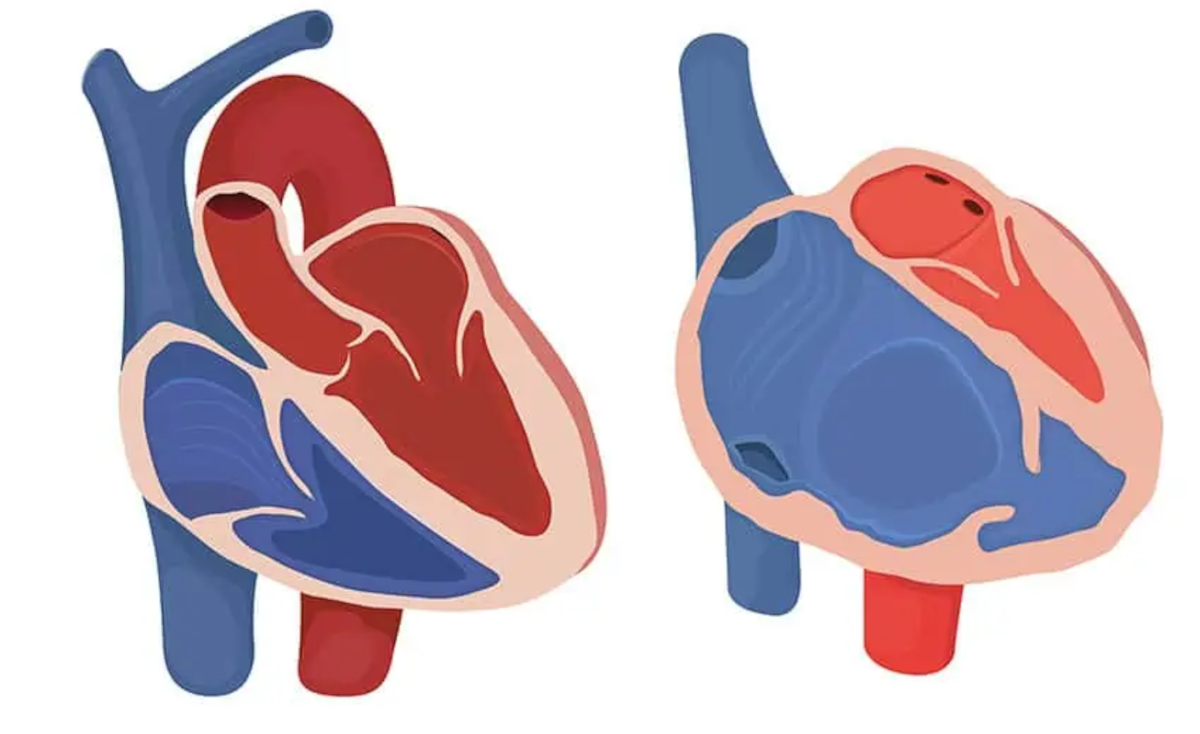
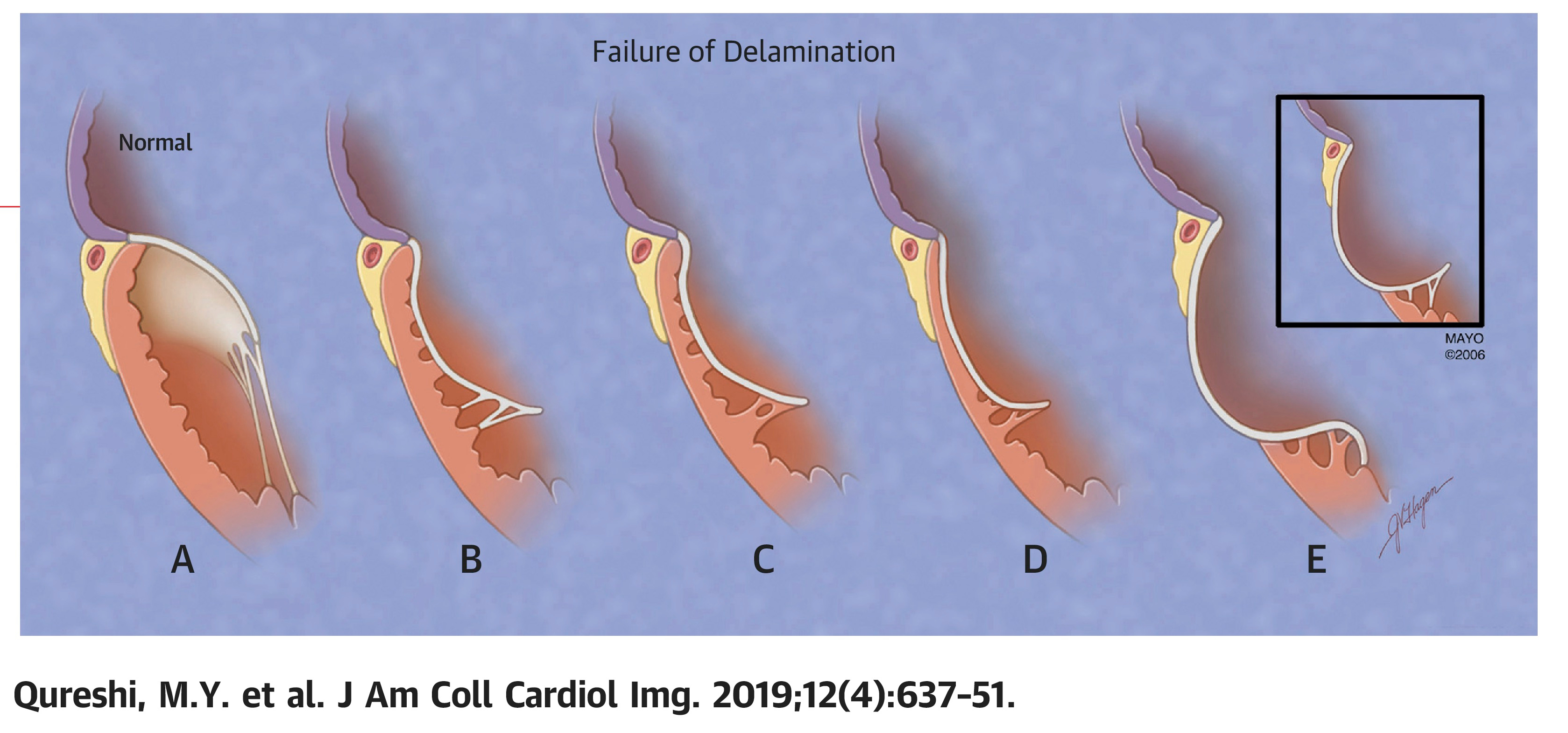
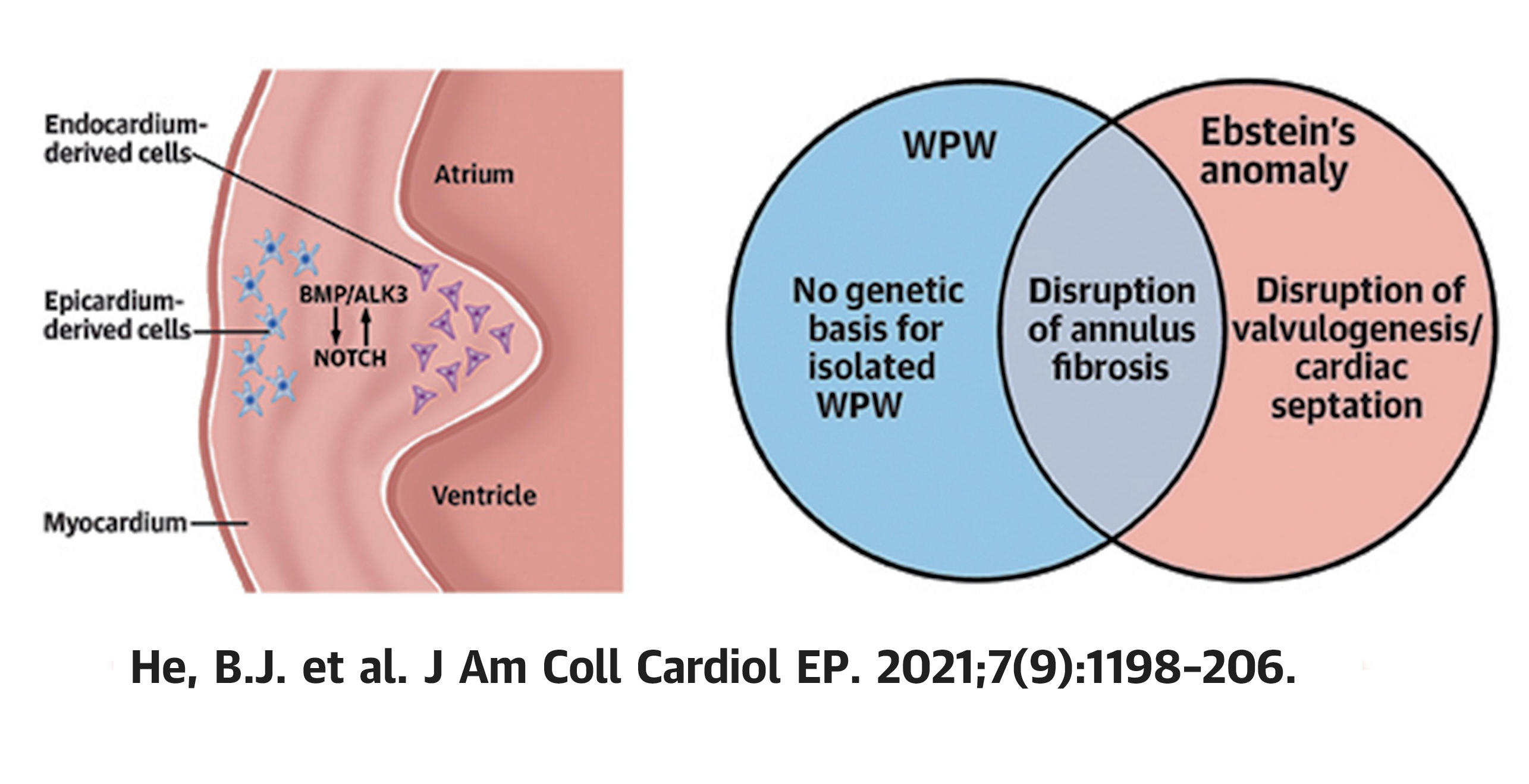
Disorder of molecular signaling pathways ?
Accessory pathways in Ebstein's
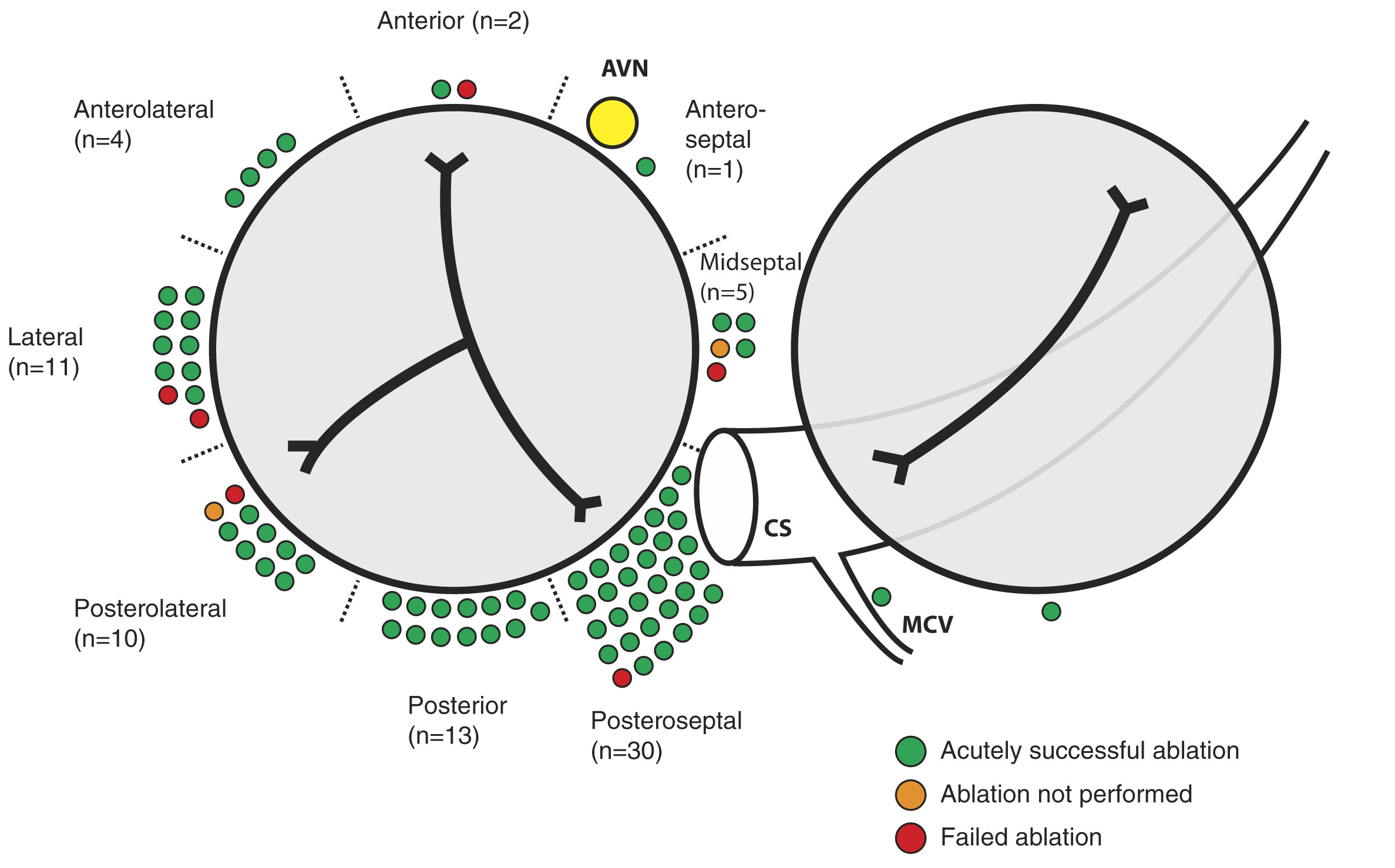
El-Assaad I, DeWitt E, Mah D …John K. Triedman, Edward P. Walsh. Accessory pathway ablation in Ebstein anomaly: A challenging substrate. Heart Rhythm, 2021; 18, 1844-1851
Ebsteins anomaly and accessory pathways
- Every patient with Ebstein's anomaly needs an ECG to assess for presence of accessory pathways
- Every patient with Ebstein's anomaly even when asymptomatic and without preexcitation should have an EP study before surgical repair
Need for preoperative EP study
- Preexcitation can be subtle
- Accessory pathways can be concealed
- Other arrhythmias can occur
- IART
- VT
- Perioperative arrhythmias are poorly tolerated
- Ablation may be more difficult after surgery
Pre op screening
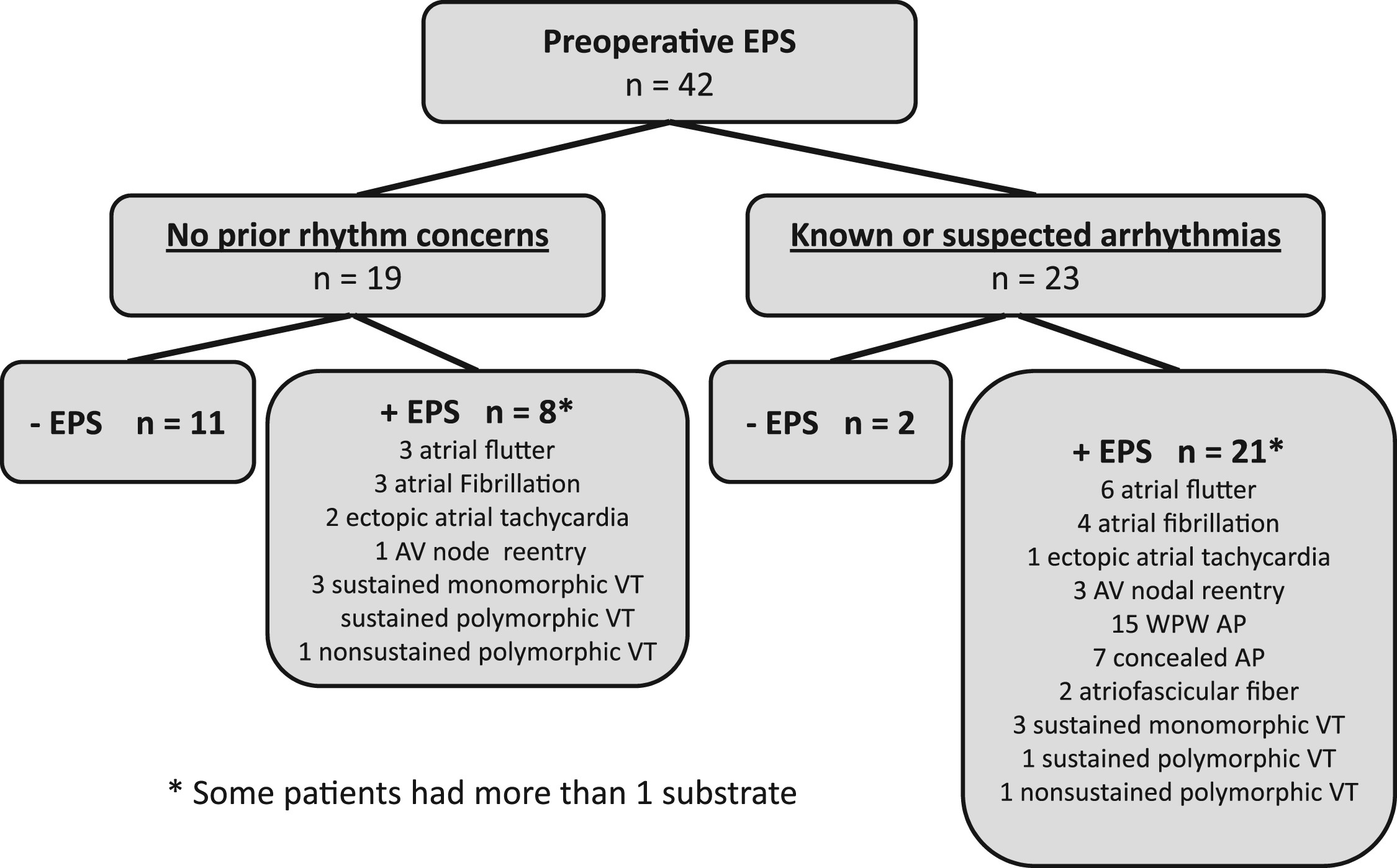
Shivapour J, Sherwin E, Alexander M … Edward P. Walsh. Utility of preoperative electrophysiologic studies in patients with Ebstein’s anomaly undergoing the Cone procedure Heart Rhythm, 2013; 11, 182-186
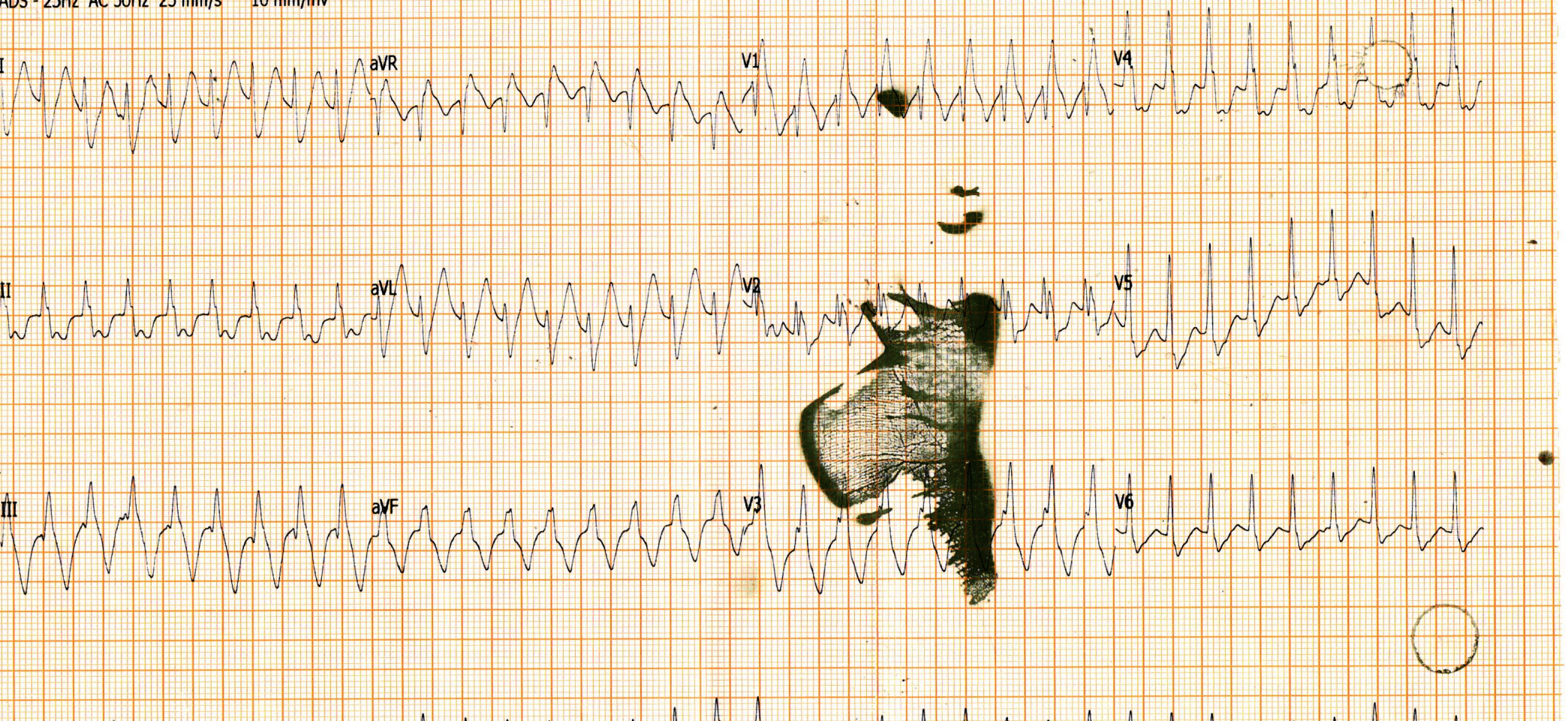
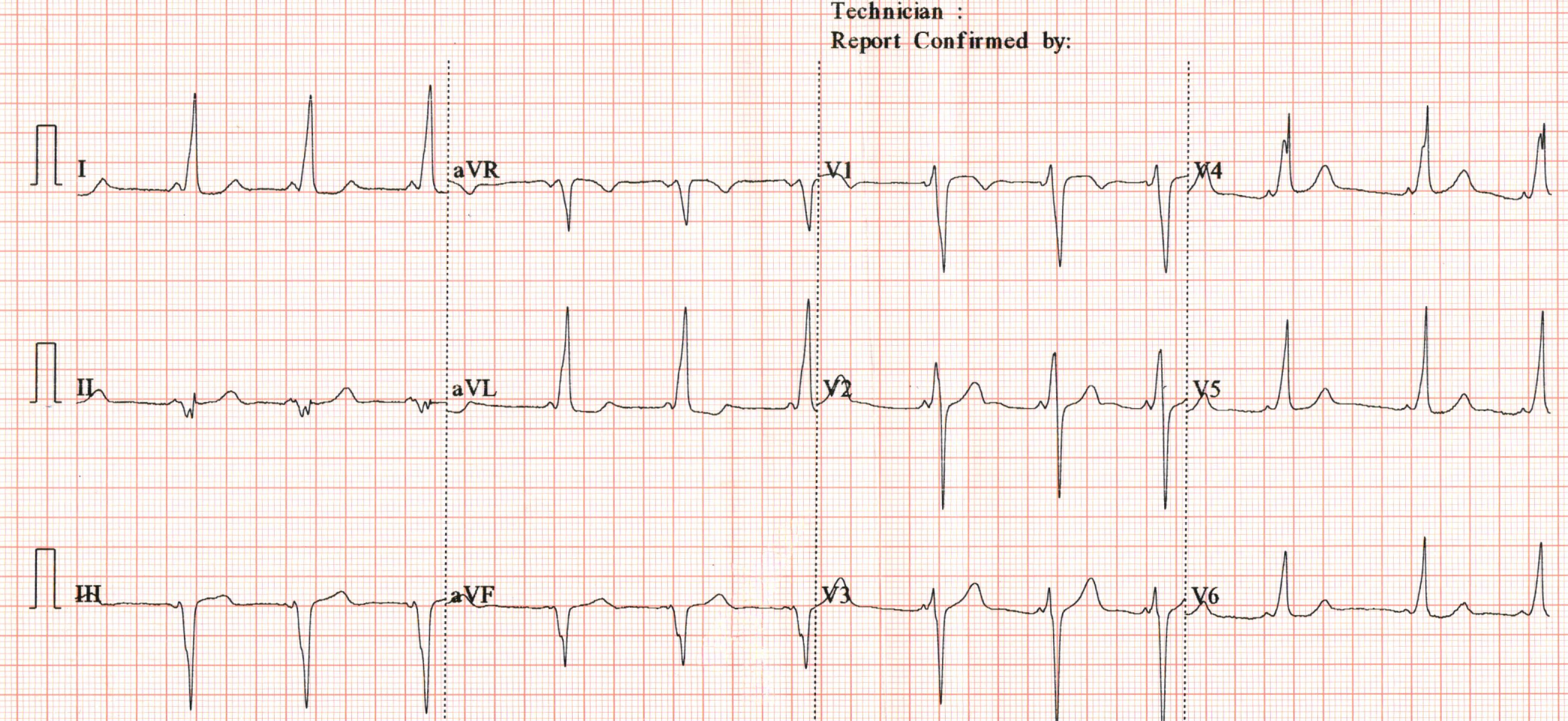
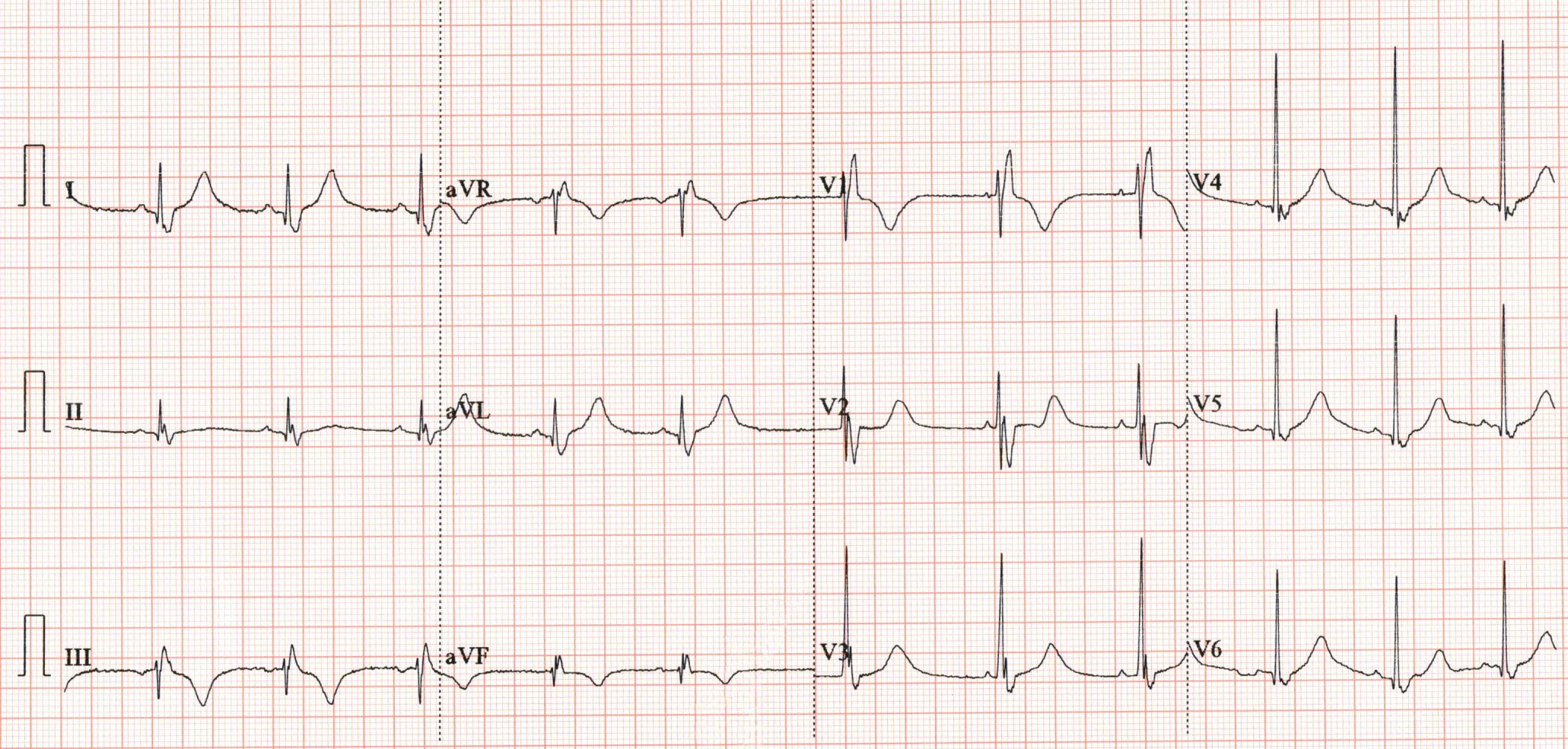
Is there preexcitation ?
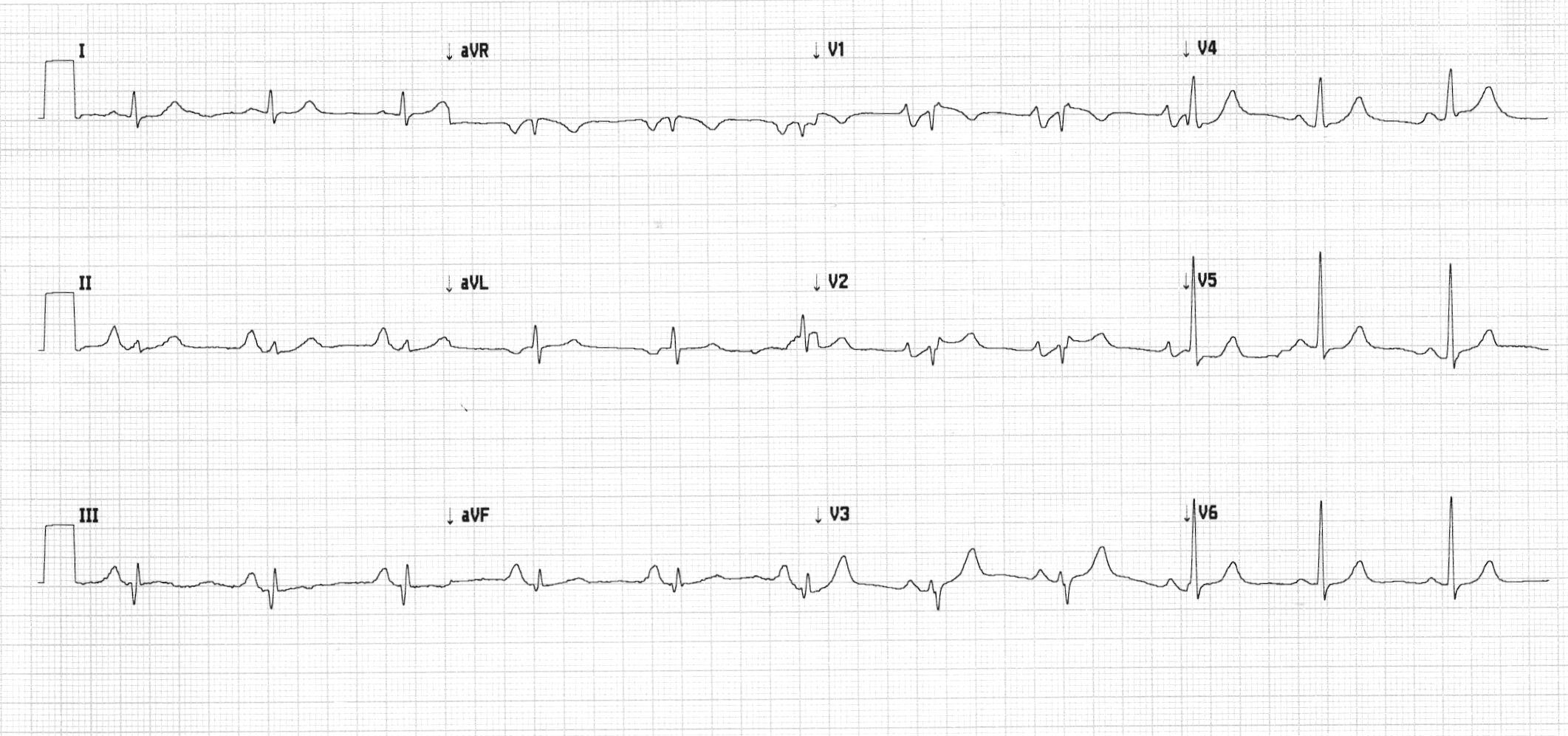
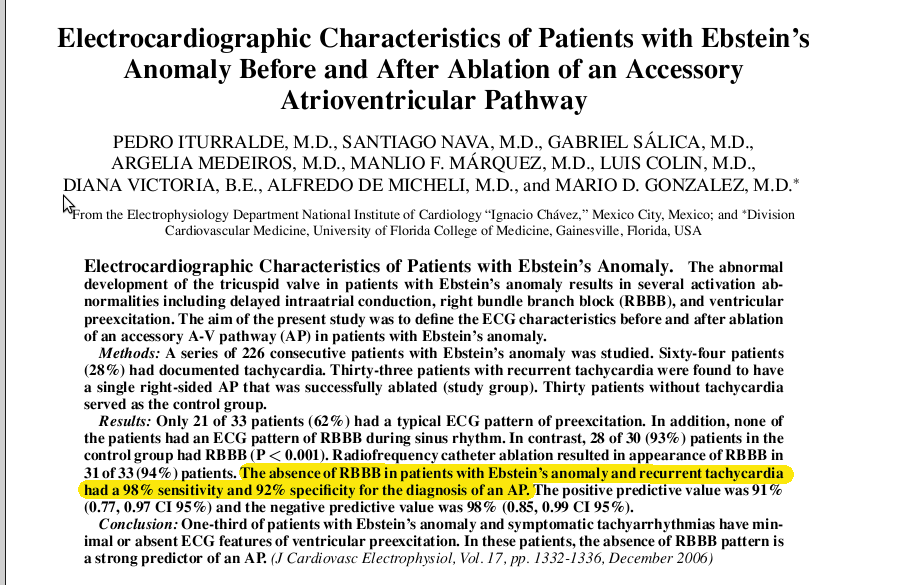
Absence of RBBB
Challenges in mapping
- Anatomic abnormalities - displaced annulus, ridge
- Broad pathways, epicardial pathways
- Signals from atrialized RV
Multiple pathways
Ridge
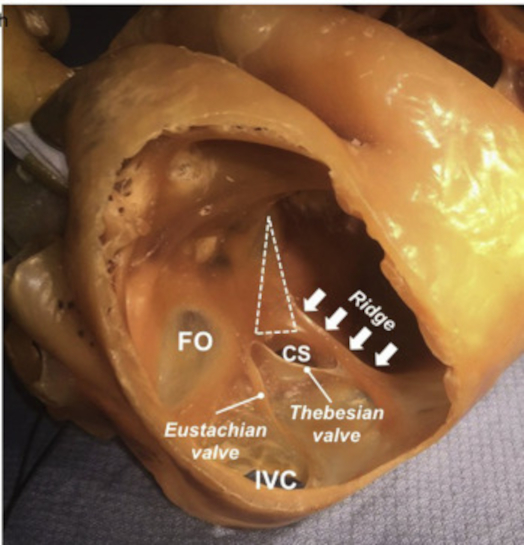
Edward P. Walsh. Ebstein’s Anomaly of the Tricuspid Valve: A Natural Laboratory for Re-Entrant Tachycardias. JACC: Clinical Electrophysiology 2018;4(10):1271-1288, doi: 10.1016/j.jacep.2018.05.024
Careful EP study
- Identify multiple accessory pathways
- Atrial pacing and extrastimuli
- Monitor precordial transition
- Identify concealed pathways
- Identify atriofascicular pathways
Multiple AP
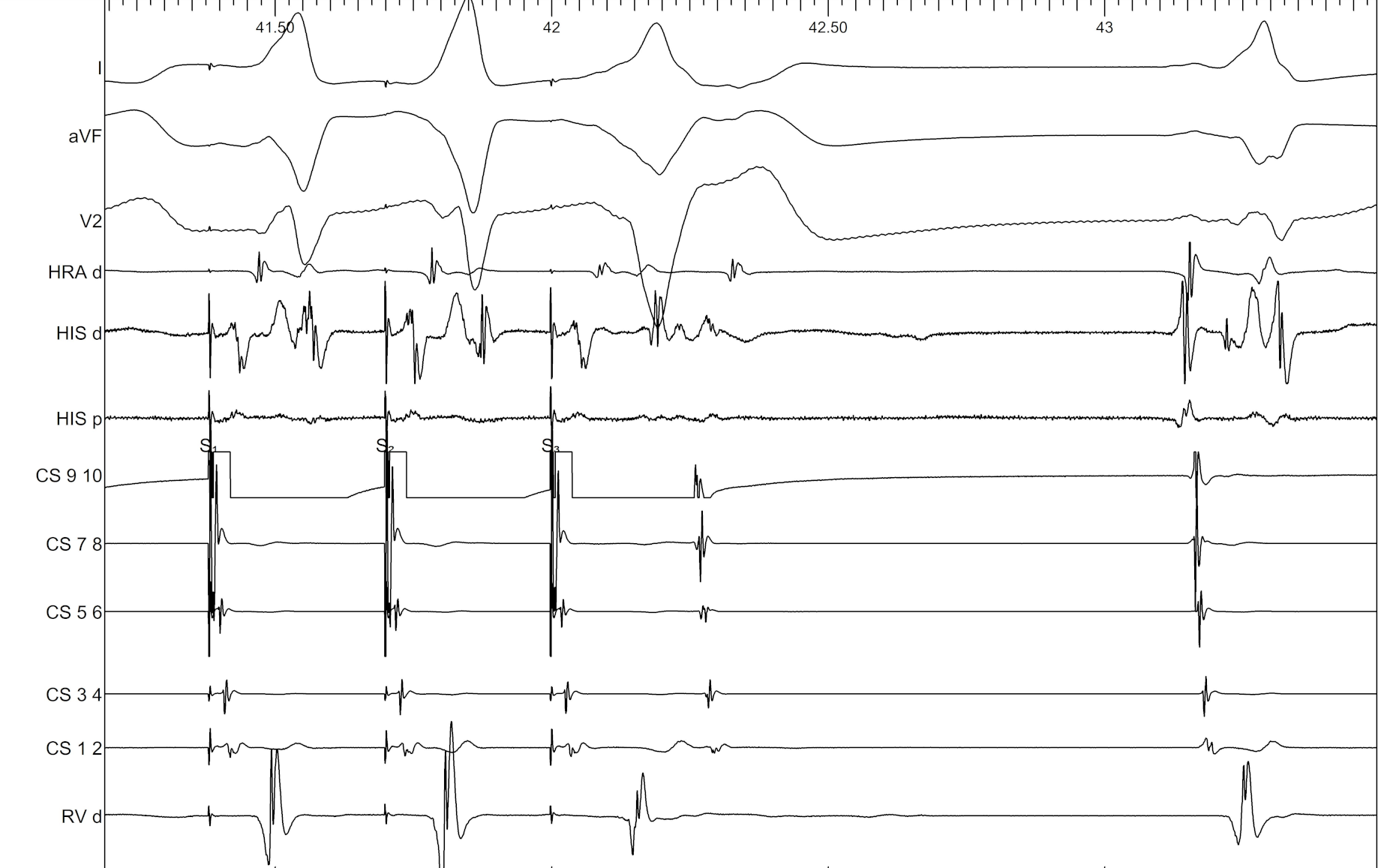
Successful sites
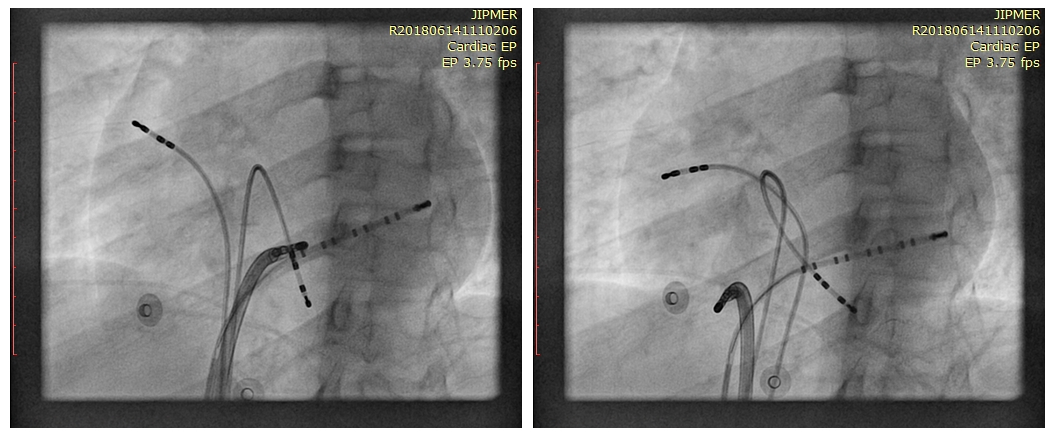
Multiple AP
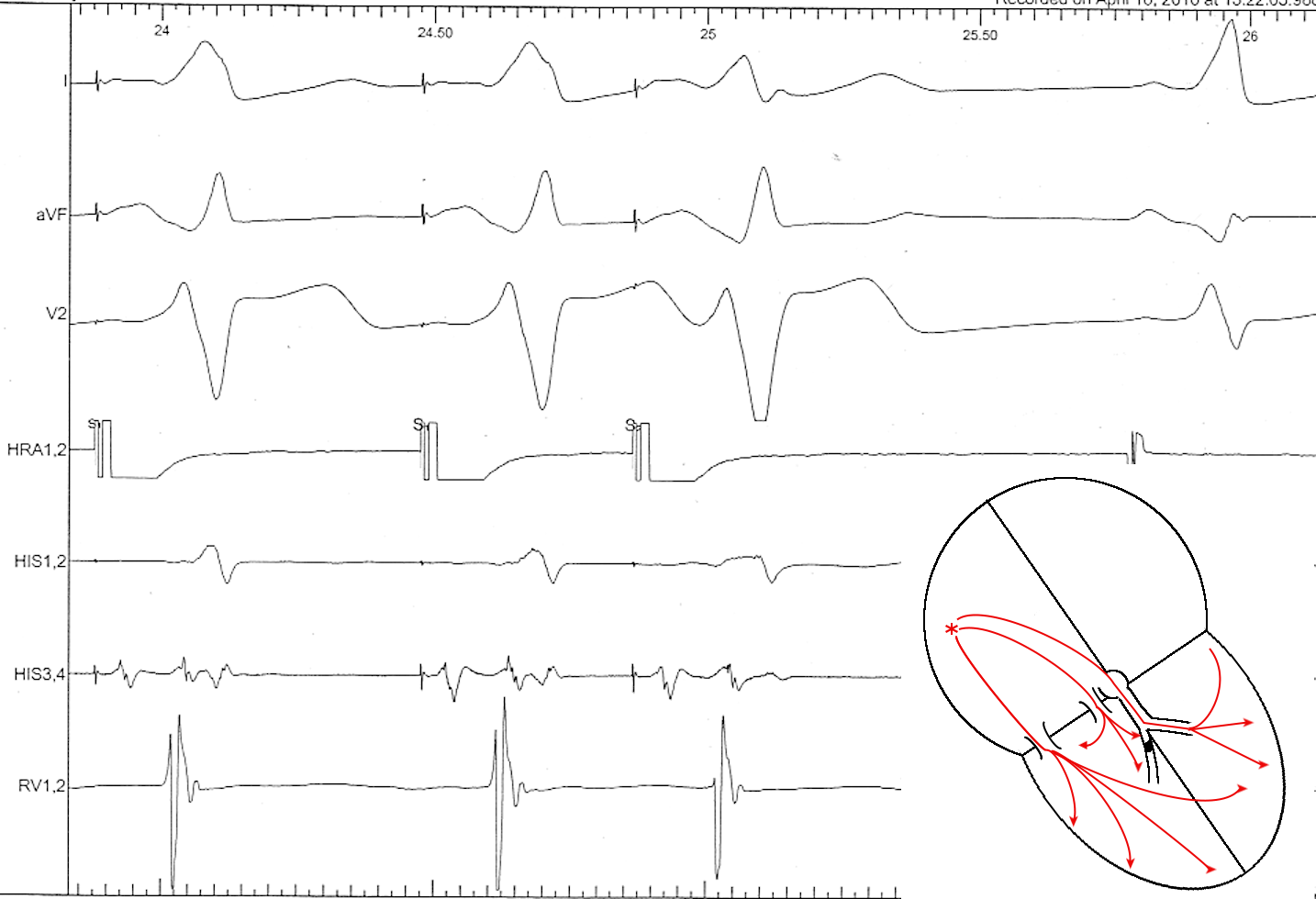
Multiple AP
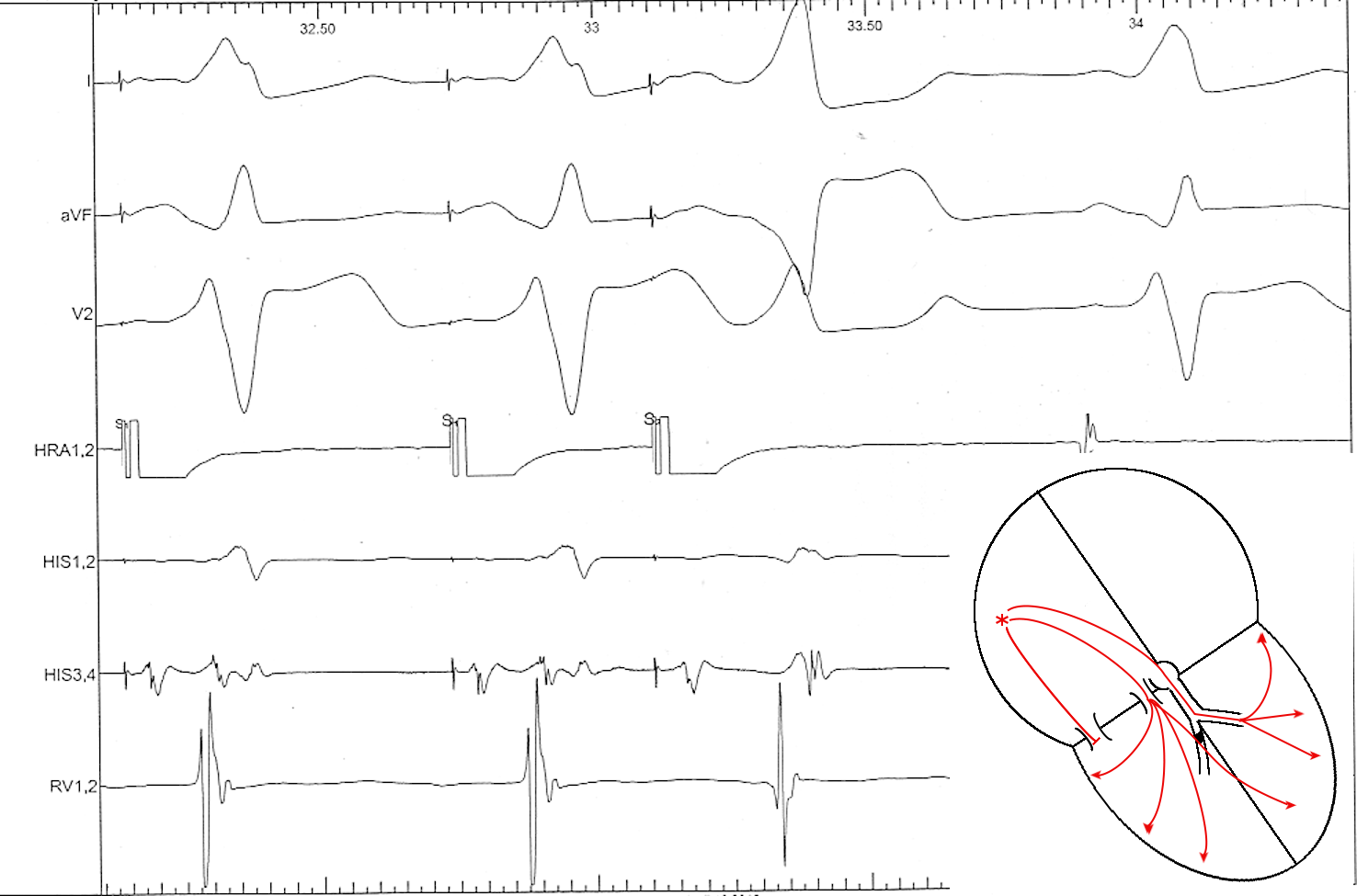
Multiple AP
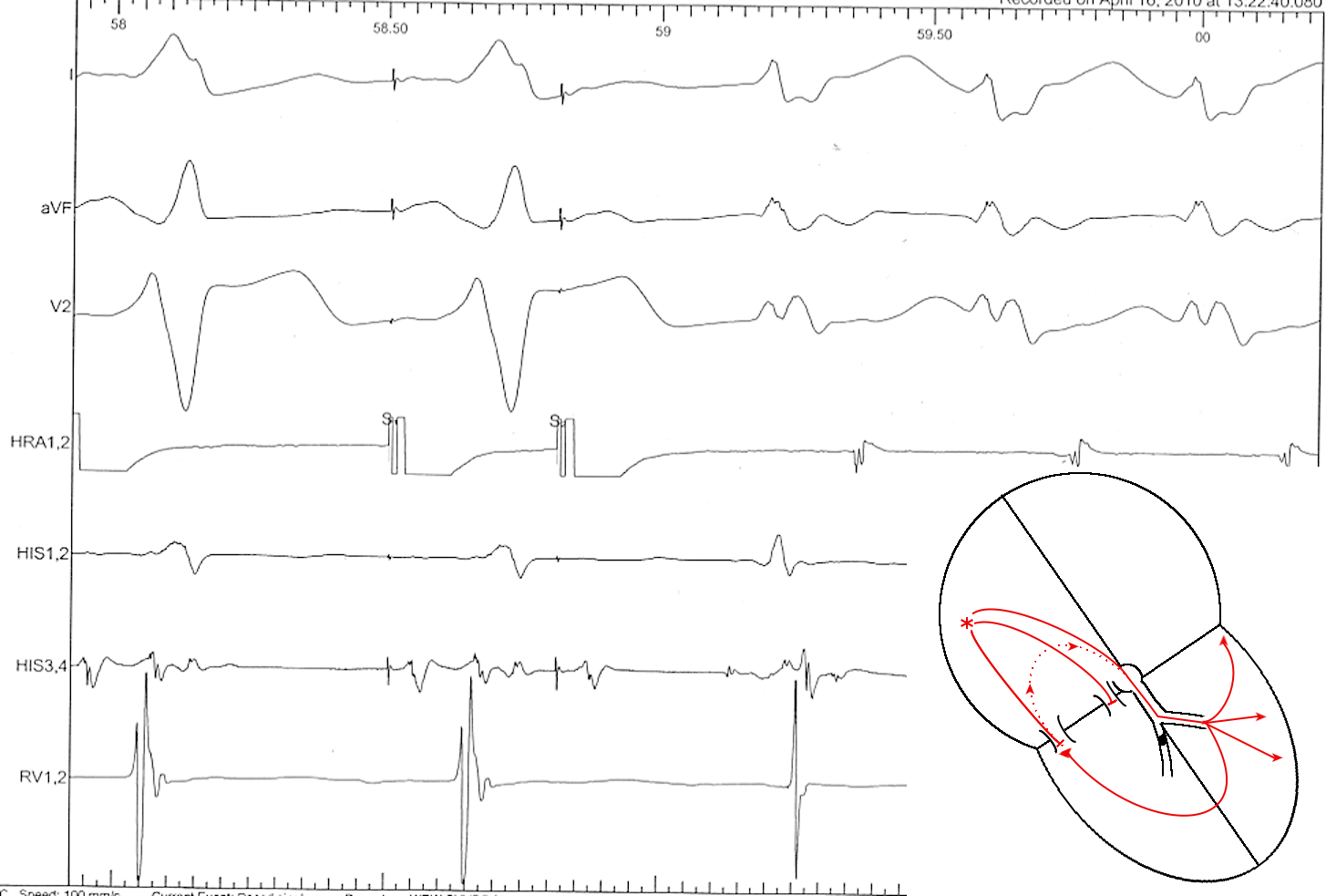
Multiple AP in AF
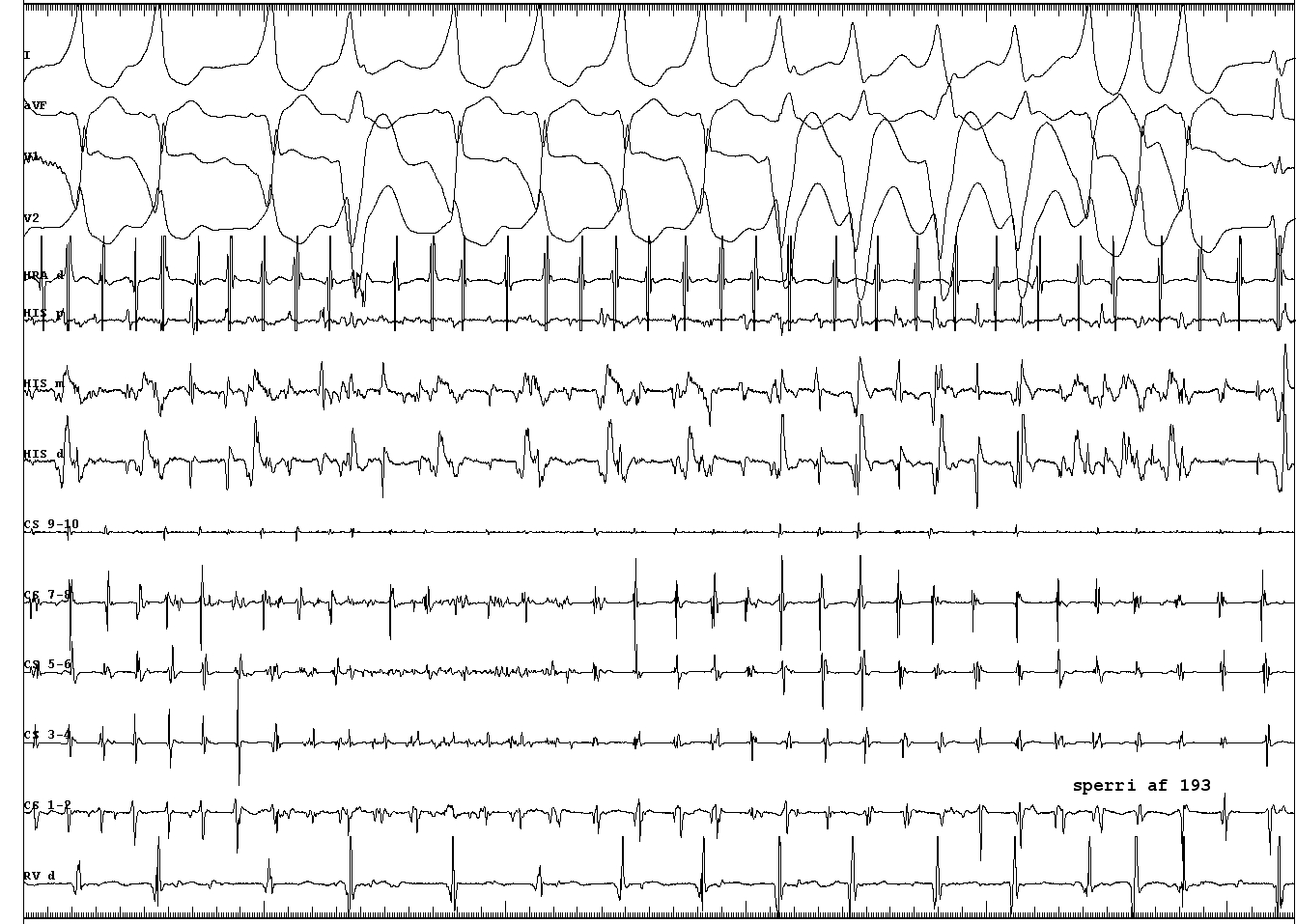
Complete characterization including retrograde conduction
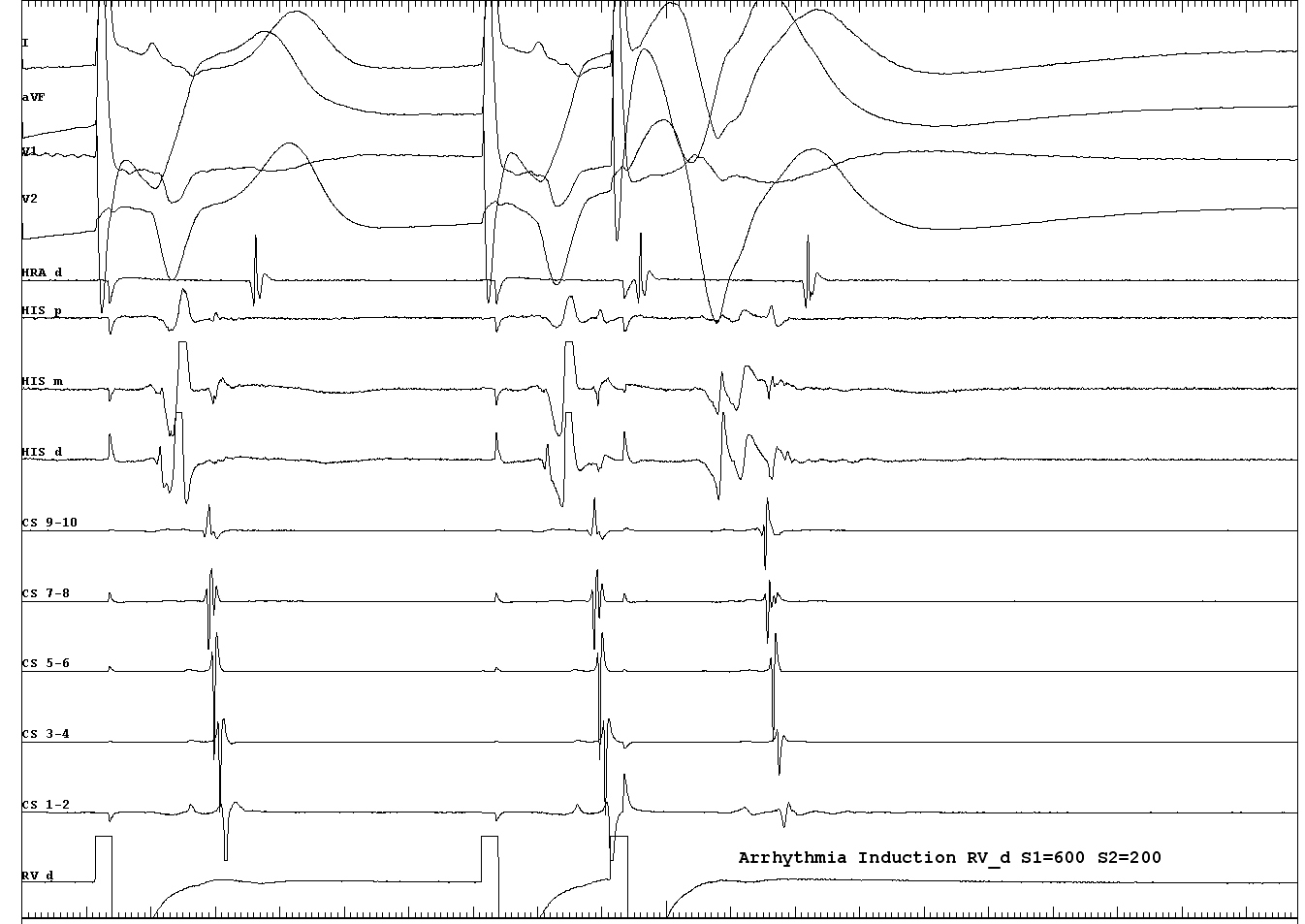
Atriofascicular AP
- True atriofascicular AP not uncommon
- May participate as antegrade pathway in pathway-to-pathway tachycardia
- May not always require ablation
Careful mapping
- Guide for true annulus
- Identification of atrial and ventricular electrograms
Identifying A and V
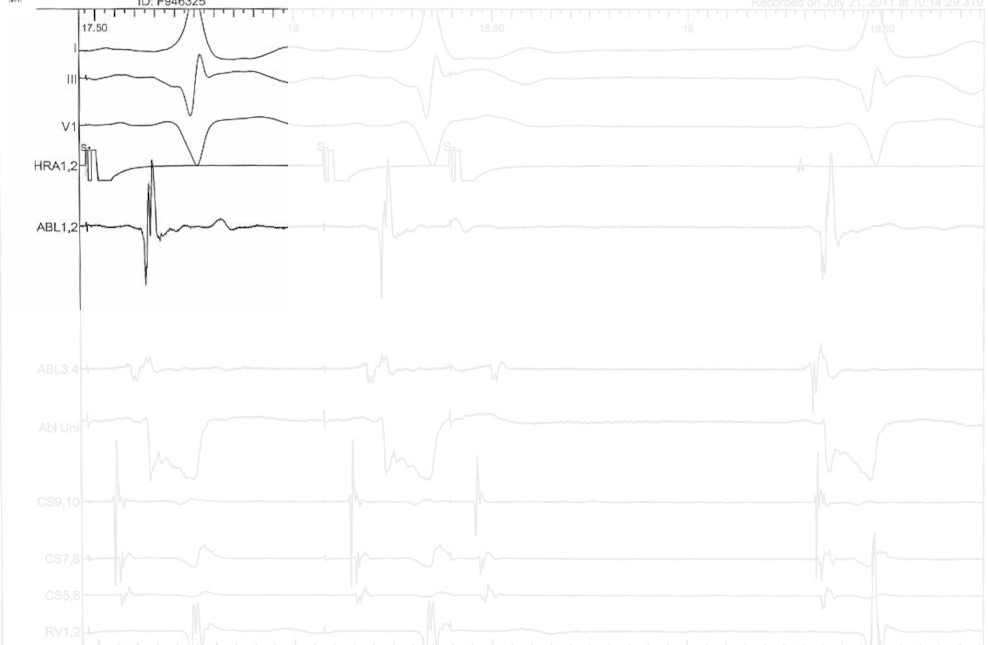
Identifying A and V
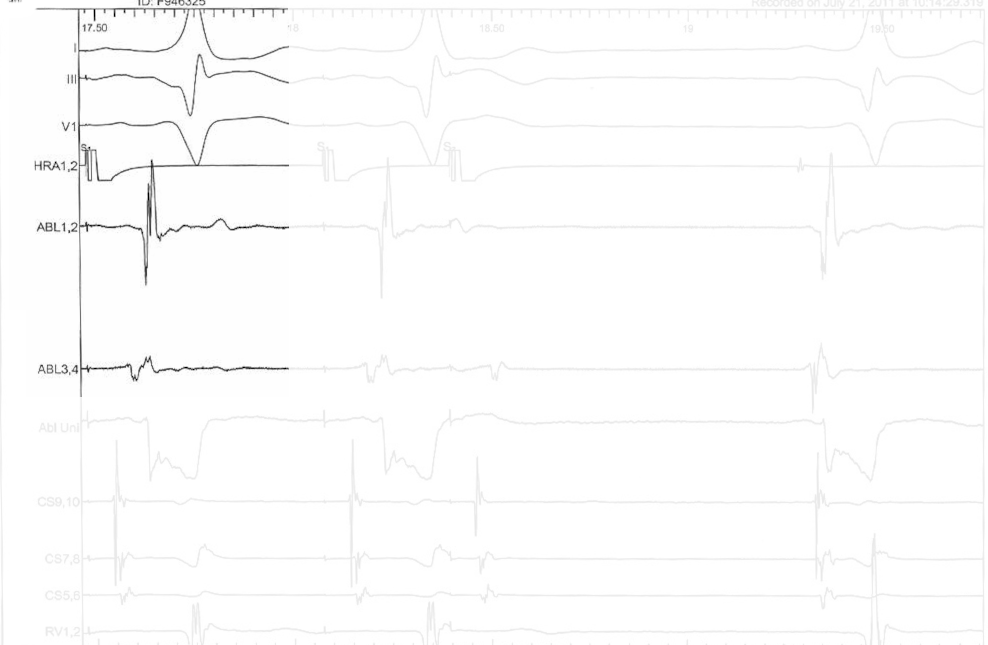
Identifying A and V
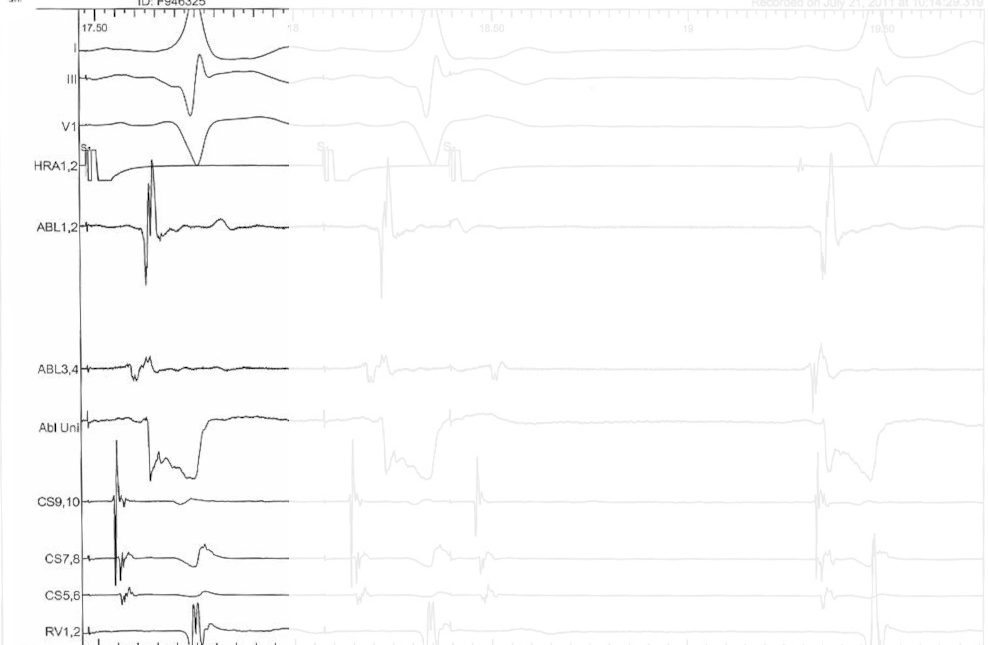
Identifying A and V
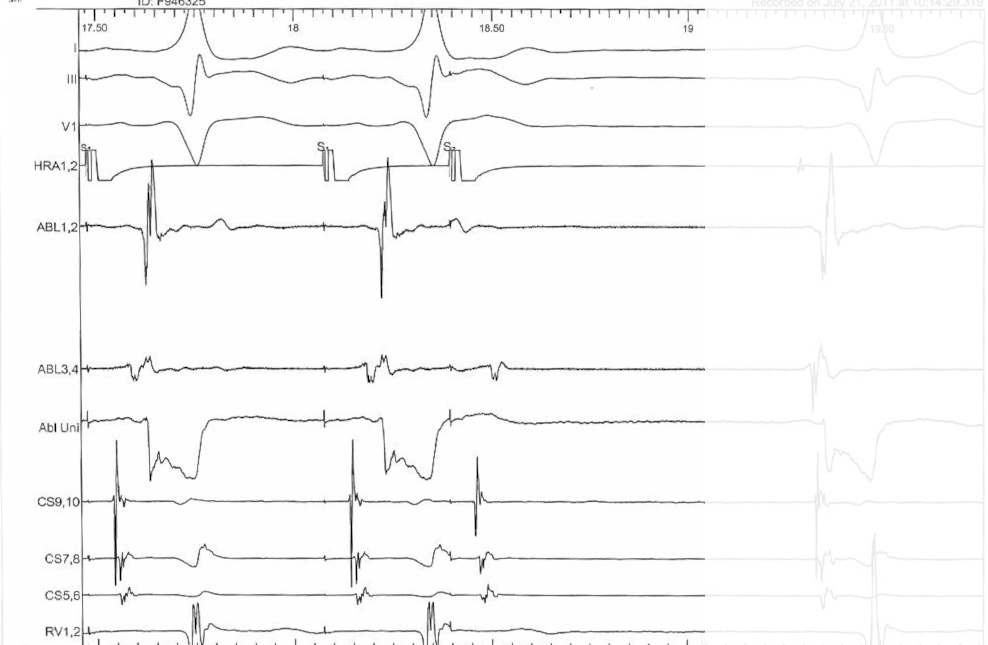
Identifying A and V
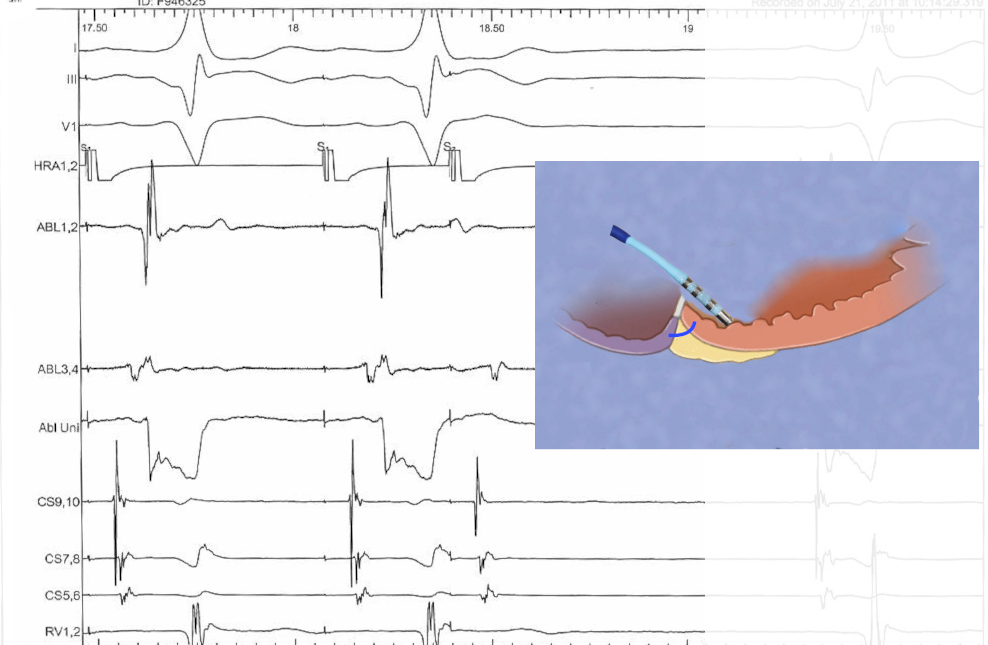
Unipolar EGM to identify
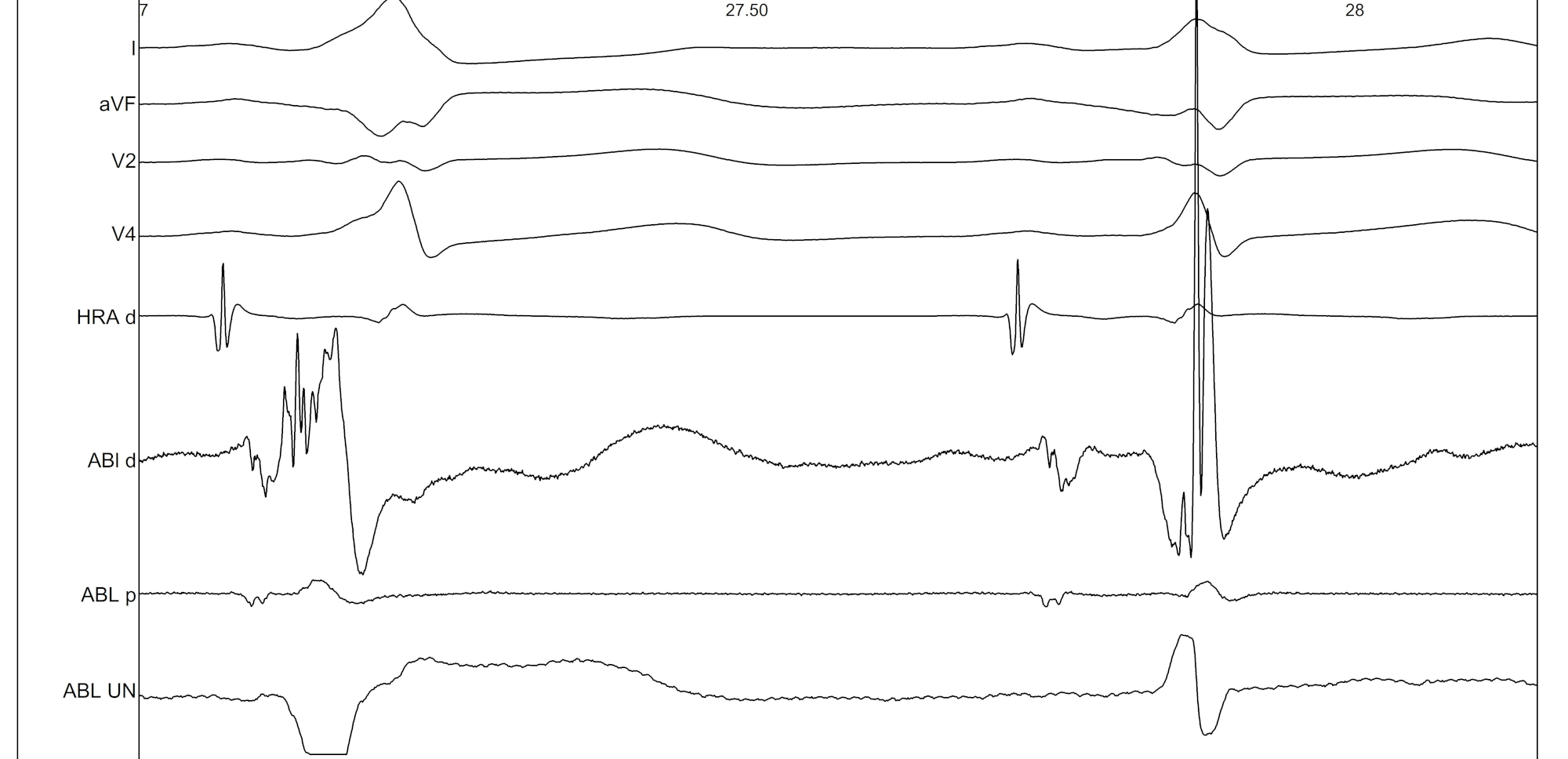
Unipolar EGM to identify
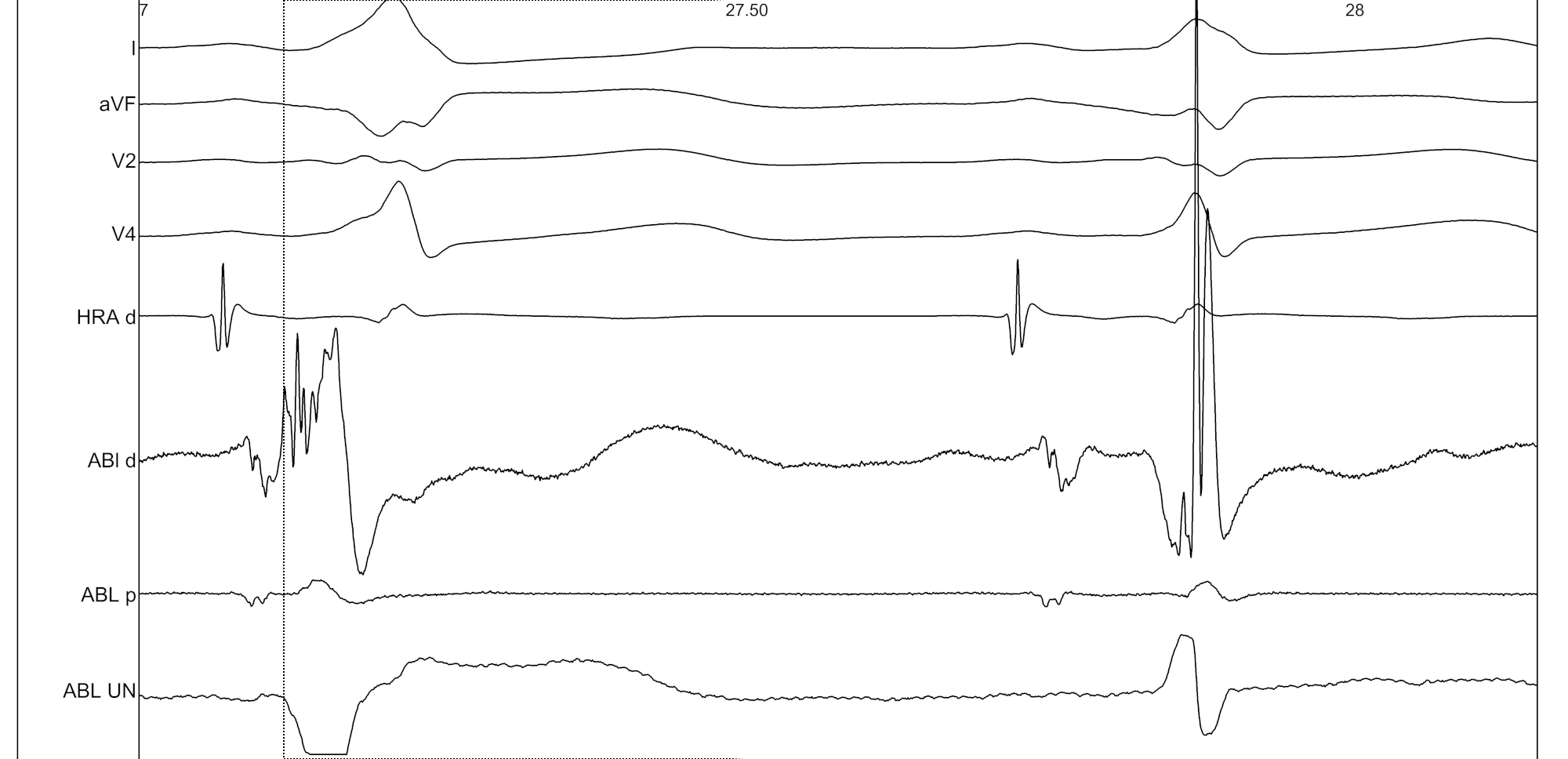
Confirm ablation of all APs - Parahisian pacing
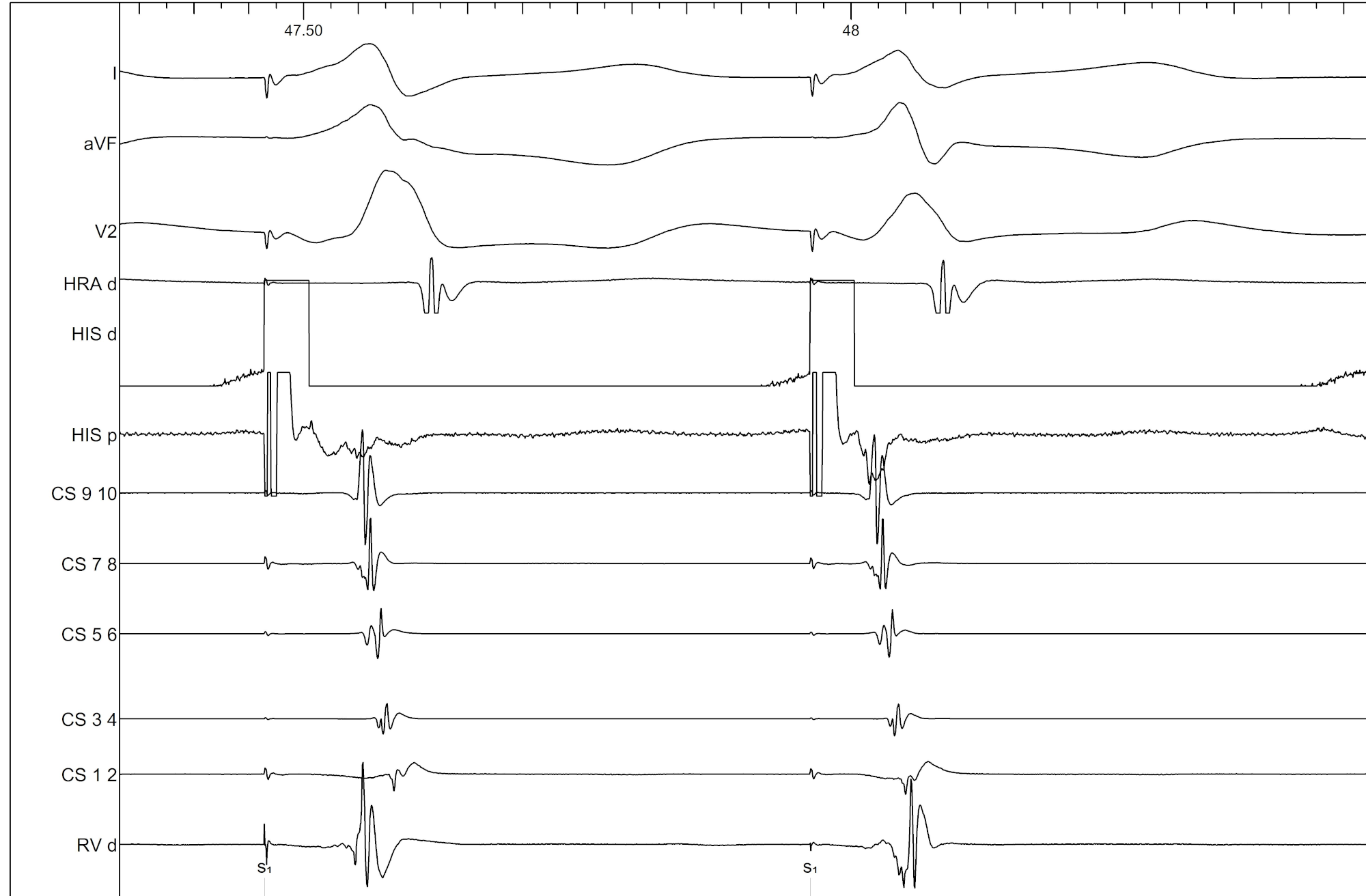
Confirm ablation of all APs - Adenosine
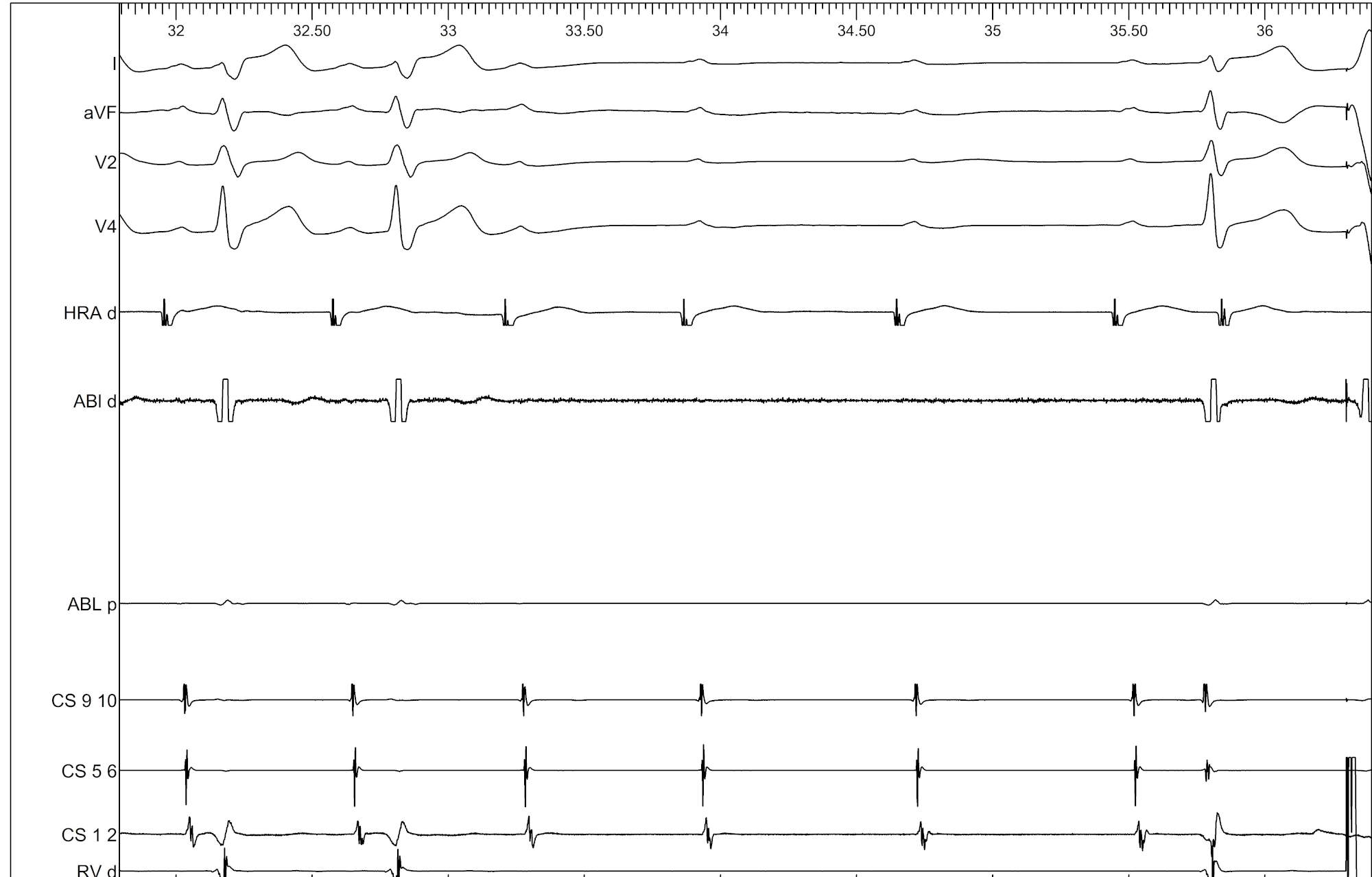
Other Tips and tricks
- Use a long sheath
- Superior approach
- 3D mapping
- ICE
Complications
- Perforation
- Coronary injury
- Thromboembolism
- AV block
- Hemodynamic compromise
AV node displacement
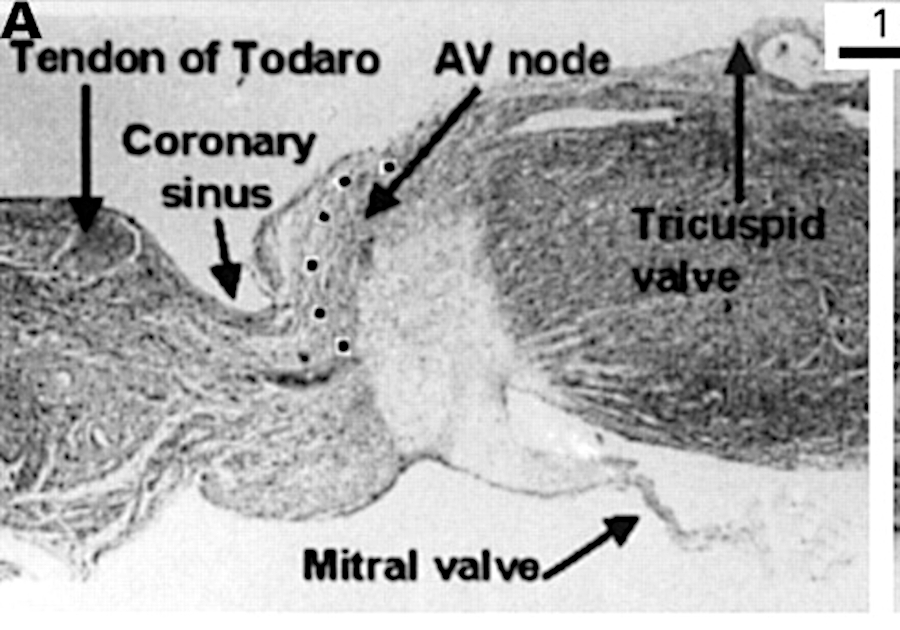
Ho SY, Goltz D, McCarthy K, et alThe atrioventricular junctions in Ebstein malformationHeart 2000;83:444-449.
Coronary artery stenosis
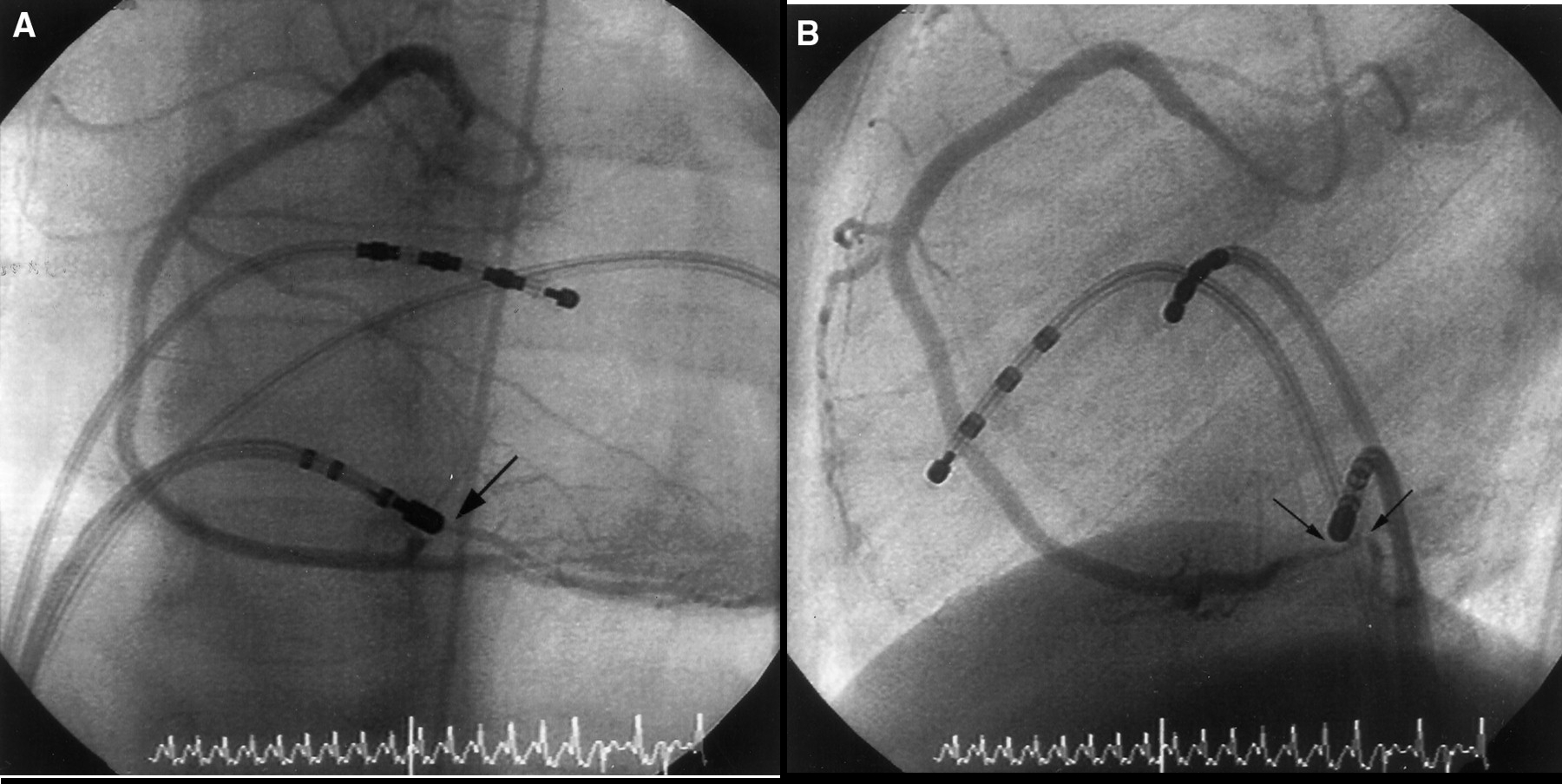
Coronary Artery Stenosis After Radiofrequency Catheter Ablation of Accessory Atrioventricular Pathways in Children With Ebstein’s Malformation. Harald Bertram, Regina Bökenkamp, Matthias Peuster, Gerd Hausdorf, and Thomas Paul. Circulation Volume 103, Number 4. https://doi.org/10.1161/01.CIR.103.4.538
Thromboembolism
- Interatrial communication very common
- Use of long sheaths
- Treat like left sided ablation
Summary - Challenges of APs in Ebstein's
- Multiple AP
- Anatomical abnormalities
- Electrical abnormalities in atrialized RV
- More prone to complications
- Additional attention while mapping and ablating