Feathers and stones. Birding at Hampi
2025-12-26photography , wildlife
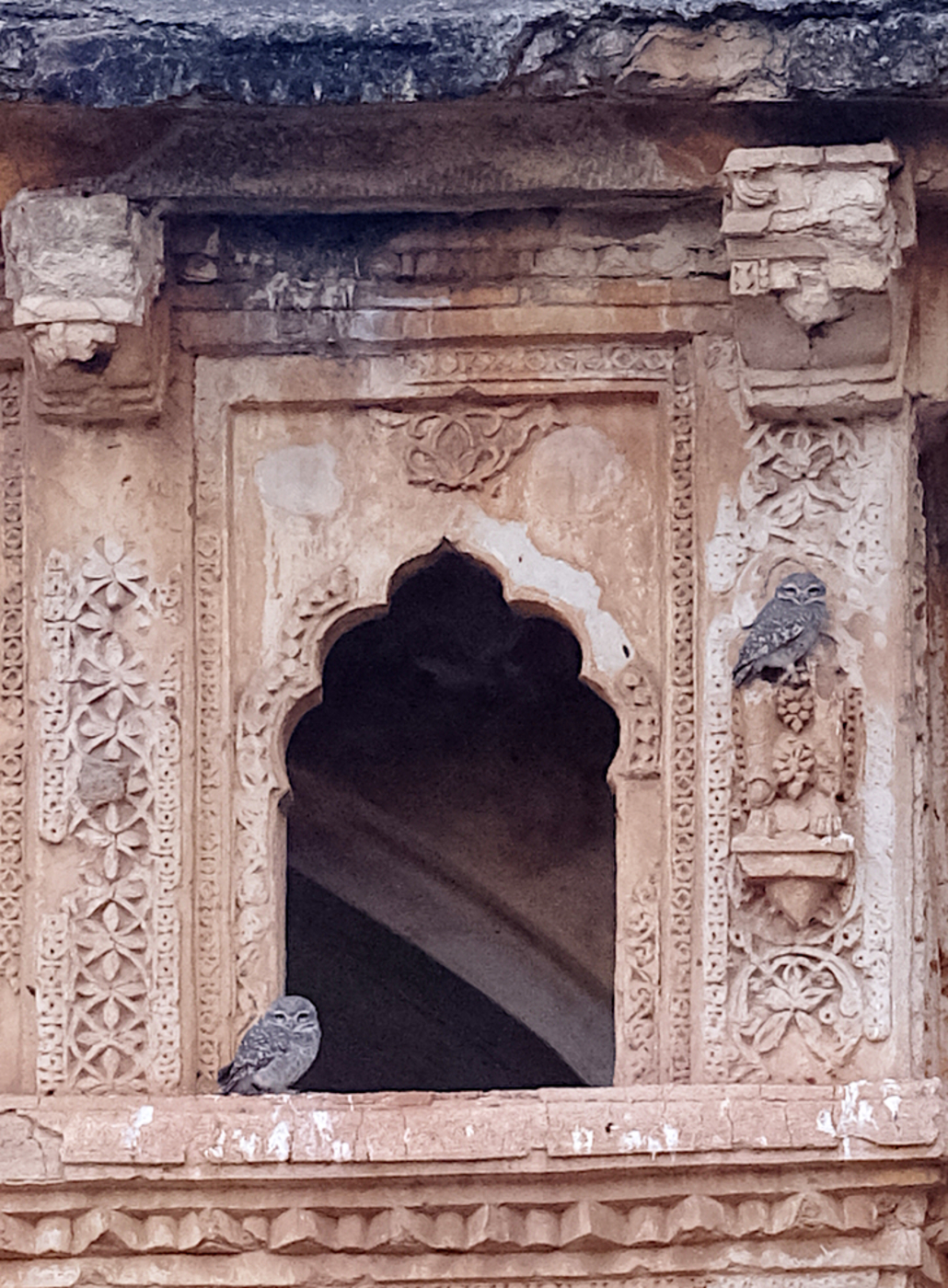
Hampi in Karnataka is best known as a UNESCO World Heritage Site, home to the ruins of the once magnificent Vijayanagara Empire. What is not that well known is its surprising richness as a wildlife destination. Shaped by the Tungabhadra River, the rocky landscape of the Deccan plateau, and extensive scrub forest, Hampi offers a mosaic of habitats that support a remarkable diversity of birds. We spent four days in Hampi in December 2025. While most visitors only focus on the temples and monuments, we spent a couple of early mornings to watching and photographing birds. Apart from devotees visiting the Virupaksha Temple, there is little activity in the early winter mornings. This is undoubtedly the best time for birding, but it is also a magical time to experience the ruins — bathed in golden light and largely free of crowds. The loud, repetitive calls of the Grey Francolin dominate the soundscape at sunrise, much like the crowing of roosters in villages elsewhere in India. These birds are frequently seen on the ground among scrub and rocks. In contrast, the Painted Spurfowl — a signature species of this landscape — is far more elusive.
This is a consolidated list of most of the bird species we saw or photographed during the trip in no particular order.
- Rosy Starling
- Lesser Whistling Duck
- Common Coot
- Northern Shoveler
- Oriental Darter
- Oriental Magpie-Robin
- Common Hawk-Cuckoo
- Laughing Dove
- Rock Eagle-Owl
- Purple Sunbird
- River Tern
- White-browed Bulbul
- Brahminy Starling
- Long-tailed Shrike
- Rufous-tailed Lark
- Shikra
- Indian Thick-knee
- Grey-necked Bunting
- Greater Coucal
- Spotted Owlet
- Indian Silverbill
- Common Iora
- Grey Francolin
- Jungle Babbler
- Green Bee-eater
- Plum-headed Parakeet
- Blue-faced Malkoha
- White-bellied Drongo
- Sirkeer Malkoha
- Purple-rumped Sunbird
- Painted Spurfowl
- Asian Koel
- Reed Warbler
- Red Avadavat
- Red-rumped Swallow
- Coppersmith Barbet
- Yellow-throated Bulbul
- Eurasian Hoopoe
- White-throated Kingfisher
- Rose-ringed Parakeet
- Grey-breasted Prinia
- Bush Chat
- Common Rosefinch
- Black-shouldered Kite
- Indian Peafowl
- Common Myna
- Black Kite
- Brahminy Kite
- Red-wattled Lapwing
- Red-vented Bulbul
- Egret
- Pond Heron
- Black-winged Stilt
- Plain Prinia
- Ashy Prinia
- Common Kingfisher
- Indian Paradise Flycatcher
- Indian Grey Hornbill